

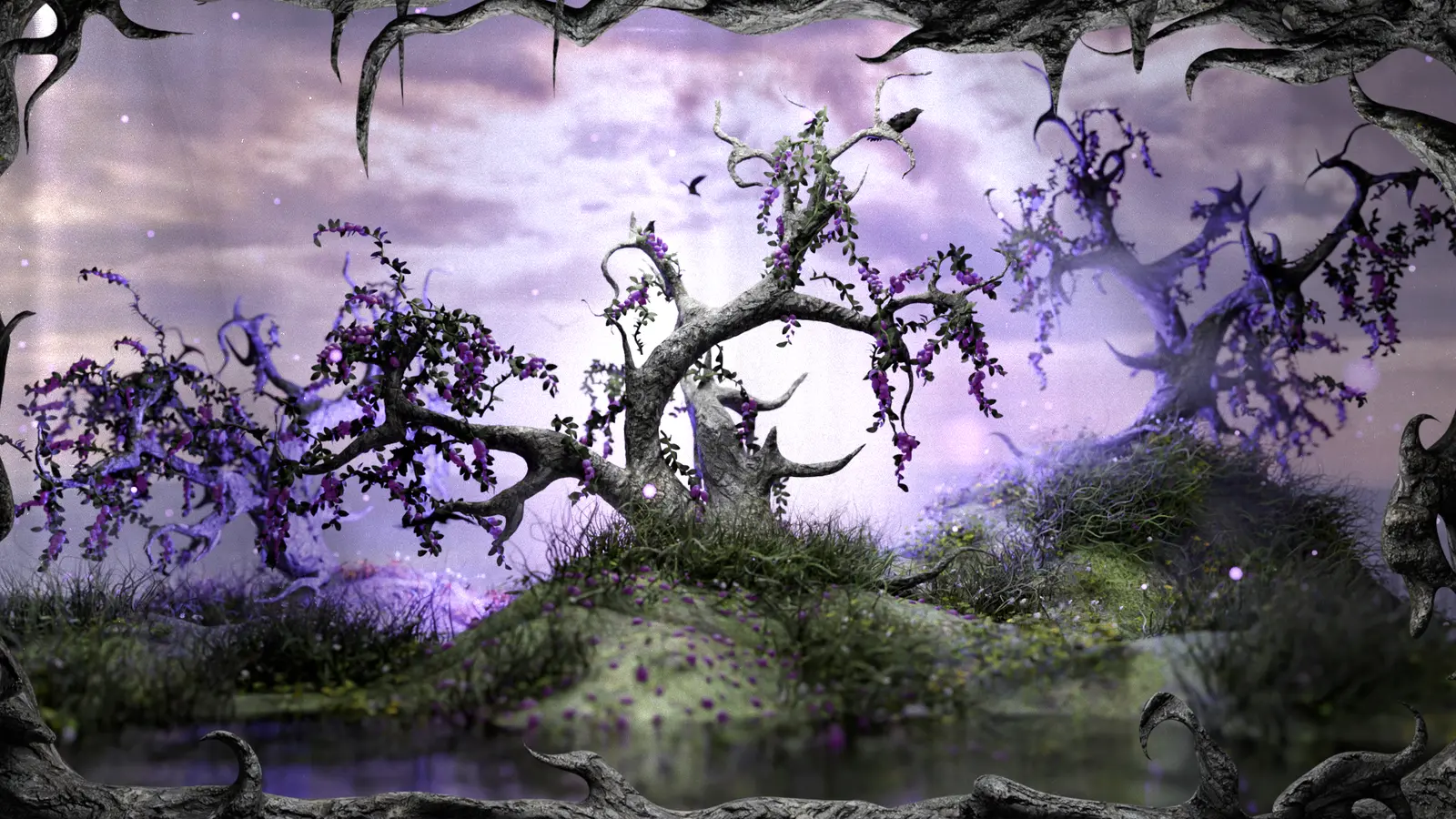
By the time she returned home that day, the wife could not remember who told her about the goblin market — where it was and how to make a deal with the men who peddled their wares there in the dim lanternlight. That was how it worked with such things. Hidden pockets of space were meant to stay hidden, and secrets must remain secrets somehow.
Her memories of the market itself fragmented into snatches as she pressed the cold butter between her fingertips. She pinched the little golden cubes out of shape and ground the flour into them, fingers walking a knife’s edge — not overheating the butter but moving quickly enough to finish before it warmed up on its own. While her hands worked, the goblin market slipped through the sieve of her memory, until she could no longer call to mind the winding streets that led her there, nor the faces of the men with whom she had dealt.
Instead, the wife thought of her wedding, of that summer afternoon when the air smelled of sweet hay and briar roses, and she was the happiest new bride in the valley. Her groom, so dashing in his silk shirt, his coiffed black hair as shiny as beetle carapace under his hat. And the bride herself, clad all in white, her shoulders draped with a lace mantilla her great-grandmother made by hand in the tireless weeks leading up to another valley wedding, long before.
As beautiful as she and her groom looked that day, the bride’s tart was the highlight of their celebratory feast. Tradition held that the fruit for a bride’s dessert must come from her mothers’ gardens. The groom’s mother had slipped away while giving birth to his only sibling — a baby girl who died unnamed and was buried in her mother’s arms — and so the bride had only had the fruit of her mother’s garden to work with. But what might have been a travesty turned out to be a stroke of luck, because the bride’s mother grew the darkest, juiciest, and sweetest plums in all the valley.
Tradition also held that the groom should eat everything his new wife prepared, to guarantee that their children would be strong and provided for. It was common to see less fortunate women — the wayward ones who were forced to marry their careless dalliances, say, or the pitiful souls who made matches of convenience — bake inordinate amounts of food, such that their menfolk could not possibly finish without assistance. But the bride was happy and content with her choice of a husband, and so she only cooked the one tart, the size of a dinner plate, to place before her groom at the feast table.
He savored each bite as he ate it, all thoughtful and slow, and careful to chew. He collected the juice that ran down his chin in a scarlet napkin, and declared that he needed nothing to drink, because the tart was so moist that eating it was like sipping on the finest claret. The bride beamed from her place at the far end of the long table, and her mother grabbed her hand and squeezed, knowing that her daughter was the luckiest young woman in all the valley.
The wife wiped her brow and flicked the last of the buttered crumbs from her fingertips, careful not to grease the white gauze strapped to her left cheek. She pressed the tart crust down into the dish with a limp fist.
On the day the wife and her husband arrived in the paved and bustling town from whence he hailed, which lay so far from the valley and never smelled of hay or briar roses, she found her mother’s tart dish nestled in the quilts on top of her hope chest. Sitting in the great emptiness of her new home, the wife sobbed as she traced the ruffled edge of the dish and remembered all the plum tarts her mother had baked in its soft hollow.
The dish she now held was newer and finer than the one she had used on her wedding day, though it sat unused for five years after her husband gave it to her, wrapped in fine green paper and bound with an ivory ribbon. The finished tart crust would resemble a ring of jagged mountain peaks, thanks to the dish’s crimped edge, which was so unlike the soft ruffle of its predecessor.
This sharp plate replaced its daintier predecessor, which her husband sent hurtling out the window one cool autumn evening, just after their first anniversary. The wife was never sure why her husband decided to break her mother’s tart dish, nor why he replaced it, just shy of fourteen years later, but the memory of that moment — the swift slice of his arm and shoulder, the ruffled glass cutting through the air like a blade, the brilliant shatter of its pieces in the paved courtyard — weighed heavy as a whetstone around her neck whenever she thought of it.
She never wanted for gifts in her marriage. Mere days before her husband broke the tart dish, he had given her a cuckoo clock made of polished wood, with little painted shepherds and sheep who came out through its tiny wooden doors and danced on the hour. It was hardly a surprise; he loaded her down with fineries whenever he returned home, no matter how mundane the trip. Not a single month went by without beautiful presents — bright flowers, exotic chocolates, and fabrics so delicate she worried they might melt away at her touch. The flowers lasted the longest, outliving the chocolates, which melted all over her fingers, and the fabrics, which shredded to threads between his.
She slid the tart crust into the waiting oven. Cracking whips of fire licked up through the grating. She did not try to temper them. A few blackened ribs had never ruined one of her tarts. The wife took one long moment to stare into the blistering heat, where the tart dish shimmered in the flames, then slammed shut the iron door.
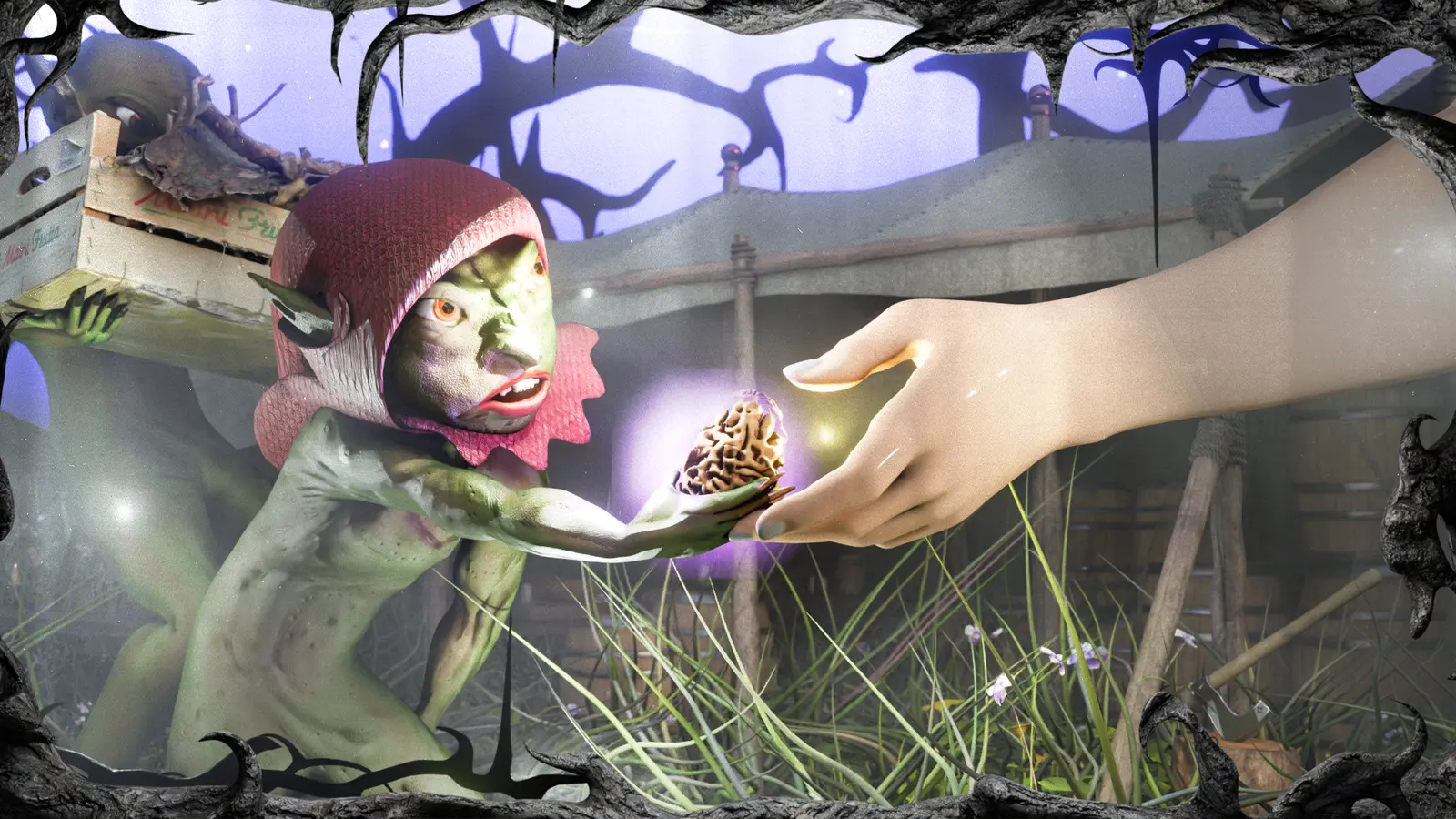
A bright fever lingered for a moment beneath the gauze, as if the fire had cauterized the gash in her cheek. Although she shrouded herself in a deep purple veil to walk through the town, the wife had not hidden her bandaged face from the goblin men. Anyone who saw her would have been forgiven for thinking that whatever lay beneath the bandage had spurred her into making a bargain, but she was there to close more wounds than that. Older wounds. Wounds that never could heal otherwise.
A silvery tendril of doubt crept into her mind. She turned away from its caress. Now was the right time for this. She was sure of it. It would not be long before her husband mistook the tart dish for a gift from some imaginary lover. The image of her mother’s tart dish spun through her mind like a discus.
The wife pressed a sackcloth towel to her mouth to steady her quivering upper lip. She swallowed the flood of hot water that boiled up from her throat. This would set everything right. Her ordeal would be over soon, and there would be no more need for tarts.
The plums that rested in the basket on the counter were not as black as her mother’s — and the wife was sure they could not possibly be as sweet or as juicy — but they were the best to be found in the town, and so they would have to be enough.
Her knife traced the outline of the first pit with precision. The memory of another dessert, baked somewhere in the long years of her marriage, spilled out with the juice from the stonefruit flesh. Baked in a pretty dish — ceramic, not glass — glazed red and speckled with tiny dots the blue-green color of a late-summer sky, a tart that stained her husband’s face and hands like port.
The wife sliced open the next plum and pried its blushed flesh away from the pit.
Red was such a fitting color.
Her mother died a few years after the wedding. He gave her the letter from the minister, the one with the funeral date already two days past. Crushed in a vise of guilt, she cried for days on end, but her husband did not meet her keening with his fist. Instead, he packed her things and arranged for her to return to the valley and claim her inheritance. All her mother had would pass to the wife: her childhood home, the flowering gardens that surrounded it, and the beautiful plum orchard to which her mother had given such care.
The wife spent that entire, blissful summer in the valley, catching up with old friends and showing off the new frocks her husband had not yet torn apart. When his letter arrived at the end of that long stretch of peace, it did not mention their house in town, and she allowed herself to imagine, for the few days leading up to his arrival, that maybe they would remain in the valley to look after her mother’s legacy.
Since returning home, the wife had worked hard to build up her husband’s reputation among their old friends and neighbors, and it was in keeping with this that she decided to throw a modest feast to welcome him back from his travels. She invited an intimate cadre of friends and decorated the long table in the dining room with her mother’s finest cloth. A vegetable soup brimming with summer tomatoes and corn began the meal, which also featured juicy lamb shanks, fried sunfish with crispy tails, buttered cowpeas, pickled cucumbers, and of course, a beautiful plum tart for dessert.
The wife picked one too many ripe fruits from the orchard that morning. When she had assembled her tart, she wrapped the remainder in a tea towel and set it aside. A black pearl the size of her fist, the plum would make a fine breakfast, or perhaps even a midnight snack, if the news her husband brought proved too good to sleep on. She did not eat it that night, nor any other. She’d saved it for the goblin men — for her bargain with them, and for what would follow.
Once upon a time, before they left the valley, the wife thought that her husband would make a loving father. She had no children, only blood, and when glass shattered against the wallpaper or the cobblestones, she was grateful for the persistent emptiness in her belly. But when he arrived at her door in a jovial mood, hoisted her off her feet and held her close in his big, log-like arms, she ached with swollen hope that maybe this — the house and the orchard, swathed in the slow peace of the valley — was all they had needed.
At dinner, the husband regaled his wife’s guests with tales of his travels and asked questions about the valley’s crop yields and the latest gossip. Red wine and white flowed easily throughout the evening, and the wife was not sure whether she blushed out of tipsiness or her pride in being married to such a man. The new leaf she had long hoped her husband would turn over, after the smashed tart dish, after every torn dress, seemed to tremble in the wind.
Then came dessert.
The gout of heat from the oven overwhelmed her with the smell of baked butter and flour. The wife retrieved the browned tart crust and laid it on the counter, careful not to shatter it in the hot dish. She looked out the tiny kitchen window to judge the time, but it was the blood-tinged bandage stretched across her cheek that caught her attention. A crust had formed along that long deep cut in her not-so-tender flesh, a rime that cracked whenever she worked her jaw or tried to smile.
The wife pulled her eyes back to the countertop. The crimson stain was insignificant compared to the slick on his knife three nights earlier. Besides, she was not baking this tart for the cut, but for the blood-red tart dish — which must have belonged to her mother, too, now that she thought of it — and what came after.
The house swooned with the fragrant scent of baked plums and sugar when she pulled the tart from the oven that night. She carried it into the dining room on a polished, wooden platter, framed by a silver serving set, and placed it before her husband on the table.
She had imagined many times how she would serve the tart — how the thick slices would look, carved out with silver and heaped onto the waiting porcelain. But no sooner was the tart laid before him, than her husband, who had been nothing if not the picture of politeness and good cheer all night, sunk one drunken fist into the center of it. He scooped out its heart and brought it — still steaming — to his lips. The room stiffened with one shared, stifled gasp. Her husband smiled up at her as if nothing were amiss, thanking her for such a treat, his teeth covered in the bloody juice and viscera of her mother’s plums.
He spared not one crumb for his wife or their guests. Chunks of half-chewed fruit spilled out over the tart dish with words of praise, twins to those he’d gushed at their wedding banquet. Bits of crumb clanked against the ceramic with the song of a clenched deid bell.
The wife pulled the thin, dark skin from one of the plum halves under her knife.
She touched one finger to the basket on the counter. Now emptied of plums, all it had left to offer was the jar of darkness that lay waiting in the nest of gingham fabric lining. The liqueur within was black and shiny as pitch, except for the ruby highlight that graced the gentle cleavage near the mouth. Redness throbbed in her vision, and for a moment she thought the jar, too, pulsed with the beat of that little shriveled heart, drowned at its center.
She smiled and ate the bitter plum skin, savored the earthy flavor tempered by the thin, slick layer of juicy pulp. She worked her way through the cut fruit by method —
Skin. Eat. Slice. Layer.
Skin. Eat. Slice. Layer.
Skin. Eat. Slice. Layer.
— until each sliver of plum laid against the still-warm tart crust.
The wife put down the knife to plunge her wet fingers into her mouth. She sucked the juice from them, smacked her lips. These plums were not as good as her mother’s, but they were the best she had eaten in years.
Their guests had left the homecoming feast as soon as politeness allowed. Tipsy and uneasy, the wife helped her red-beezered husband up the stairs and into the big bed dressed with clean, pressed linens in anticipation of his arrival.
He vomited on them.
Her eyes stung. She breathed through her mouth as she cleaned, both to avoid the stench of bile mixed with half-digested plum tart and to hide the gurgle of snot in her nose.
Her husband grumbled in the corner. The moment his wife threw an extra blanket over the wetness, he laid across it and drew her to his hot, sticky chest.
She tried to pull away, but he held her fast. She covered her face with her sleeve to block the smell — and the taste — of his reeking breath. When he faded off into loud snores, she relaxed for the first time since dessert, grateful that his drunken episode had ended with mere impoliteness.
In the oven-heated kitchen, the jarred wine was just as fragrant as the wife remembered, all hot sweetness that made her mouth water. Her long knife hovered next to the open maw for a few long moments before she stabbed it into the black syrup. The flesh of the succulent little heart clung to the blade as she pulled it out — the last plum from her mother’s orchard, engorged with the dregs of that homecoming dinner and the glut of the goblin men’s magic.
The wife worked with quick precision —
skinslicelayer
skinslicelayer
skinslicelayer
— and placed the skin of the warped fruit aside on the damp tea towel, which she planned to let burn. She flayed off slices as thin and translucent as oiled paper, which she turned out into leaves and petals. When she was finished, the last plum lay fanned out: a blossom in the center of the tart.
Screams filled the valley the morning after her husband’s return. Down in the orchard, an army of men sunk axes and crosscut saws into her mother’s plum trees. Their strokes drew long cries of agony from the wood. Tree after tree crashed to the earth and spilled its half-ripe fruit — green plums she’d planned to make into sweet wine — onto the ground to rot.
Her husband clamped one hand around her jaw. His other arm snaked across her chest, too close to her neck, and pulled her back against his breast. He still stank of vomit. Her entire body felt cold and hot at the same time, the joints frozen into place as the muscles around them burned.
Fear crowded out understanding. As tears rolled down her cheeks and over his fingers, the wife tried to reconcile the happy man from the night before with the one who now forced her to watch her mother’s legacy fall, tree by tree and plum by plum.
But then, there was the monstrous way he had eaten the tart. The same hand that now held her mouth shut had shoveled the dessert into his bearded maw without a trace of kindness, with not one thought for anyone else’s pleasure.
She later learned that he’d made a deal while he was away in the city, had sold her orchard to a shop that specialized in furniture and baubles crafted from exotic woods. It was a rare thing indeed for someone to approach the woodworker and offer to sell him the hearts of prizewinning plum trees. How could the man say no?
How could he say yes? How could he betray her, crush her softness, snatch her heart from its place in the valley?
It was only once she went scrounging for gauze that she found the bill of sale, saw her signature forged alongside his own on the contract that erased her mother’s plums — her plums — from the world. The names gleamed in the sunset-colored candlelight. In signing her orchard over to the woodworking shop, her husband had also signed his life over to her. One signature in ink, the other in blood and plum juice.
It had taken years, but she had finally come to collect.
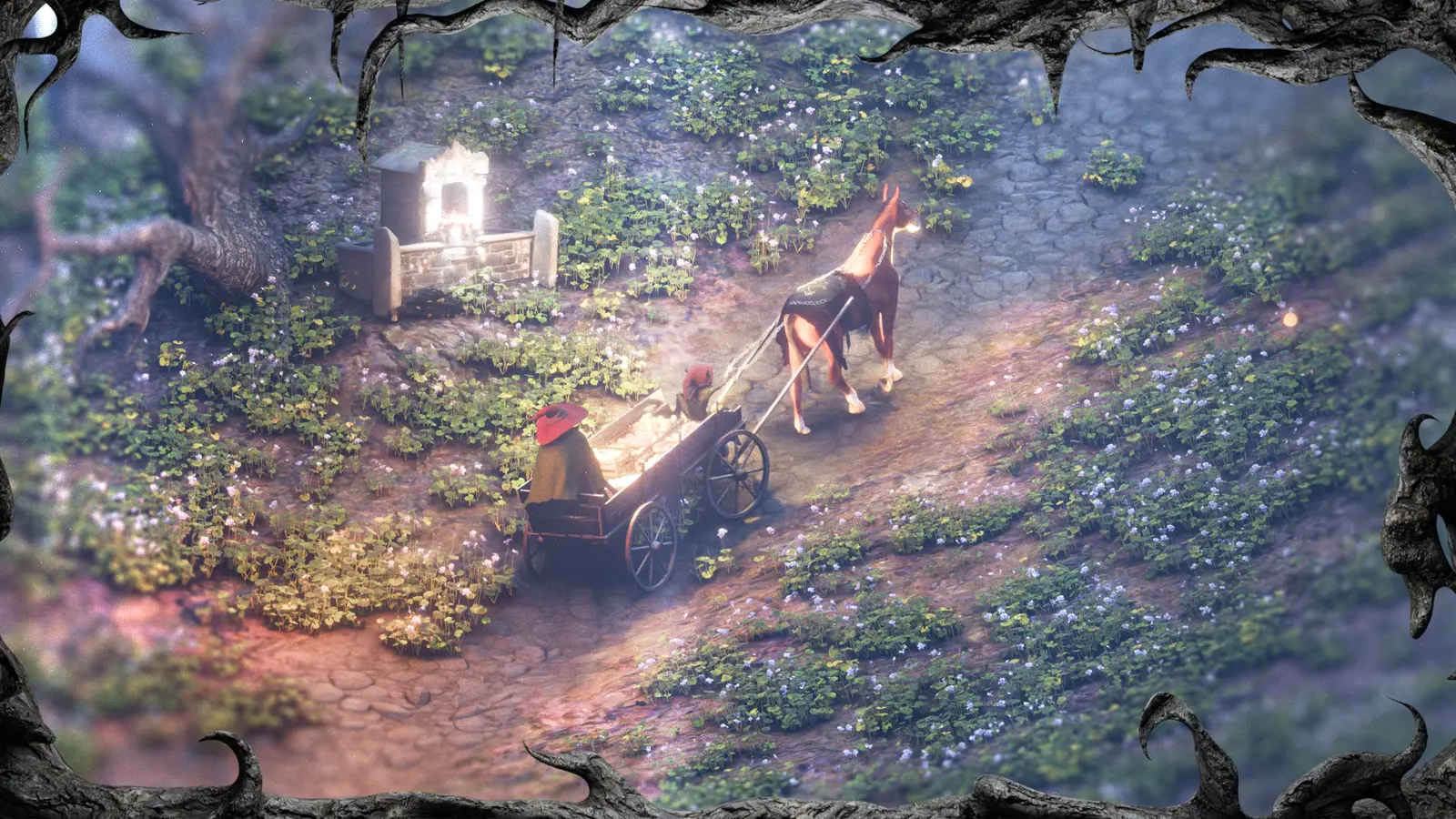
Putting the goblin market’s magic to her last plum had cost her much. The money left in her purse was enough to hire a coach back to the valley and purchase her mother’s empty house from the uncaring outsiders who had let it go to ruin. No more, no less. The rest would go up in flames. Smoke and ash would ferry the value of what she destroyed here to the men who had traded with her in destruction.
The wife sliced the preserved skin into tiny scraps and bruised them into mash against the bottom of the carafe. She poured the dark drink into the crystal pitcher and swirled the vessel with care to stir in what she had muddled. It would be bitter. That was fine.
She was bitter too.
#
The body was already growing cold, its lips swollen and dark, by the time the widow smelled the smoke. To think, after everything she had endured over the last twenty years — it only took one candle, tipped toward the curtains in her husband’s billiards room, to turn all he owned to ash.
She pulled on her dress, one his hands had never touched, and pressed her purse down into the space between her breasts. Her heart beat hard against the leather and gold — tun-TUN tun-TUN tun-TUN. Three times her feet slipped on the edge of a stair, but she held firm to the railing with one hand, clenched the other at her side, and did not stop.
The widow did not look back at the empty tart dish with all its jagged edges, nor did she right the overturned wine carafe, which had had nothing left to leak onto the tablecloth. All of these were past, and she cared only about what lay ahead.
She paid the coachman waiting in the square two extra pieces of silver to leave town quickly. He never saw the smoke, nor looked upon her bloodied face, which she hid beneath the wide brim of her hat, behind a plum-dark shroud.

The new moon punched out a hole in the clear sky overhead. They rode for the valley with only the stars to guide them. The widow slept easy in the coach, with the heady perfume of a goblin-kissed plum still fresh on her skin.
By law, she had the right to claim all that her husband left behind. She forfeited everything to the market men. Her life, the purse, and the clothes on her back — these were all she brought with her out of the flames. These, and a single peach pit, iridescent gold in the starlight, that would bear velvet fruit the next year.
Why a peach and not a plum? She had asked the goblin men the same. They had only smiled at her, unable or unwilling to answer.
END


